TrevorHumble
Technical product manager for AI and the MyUI student portal at the University of Idaho. I also build tools for Blender and make 3D art.
MyUI redesign
University of Idaho · 2025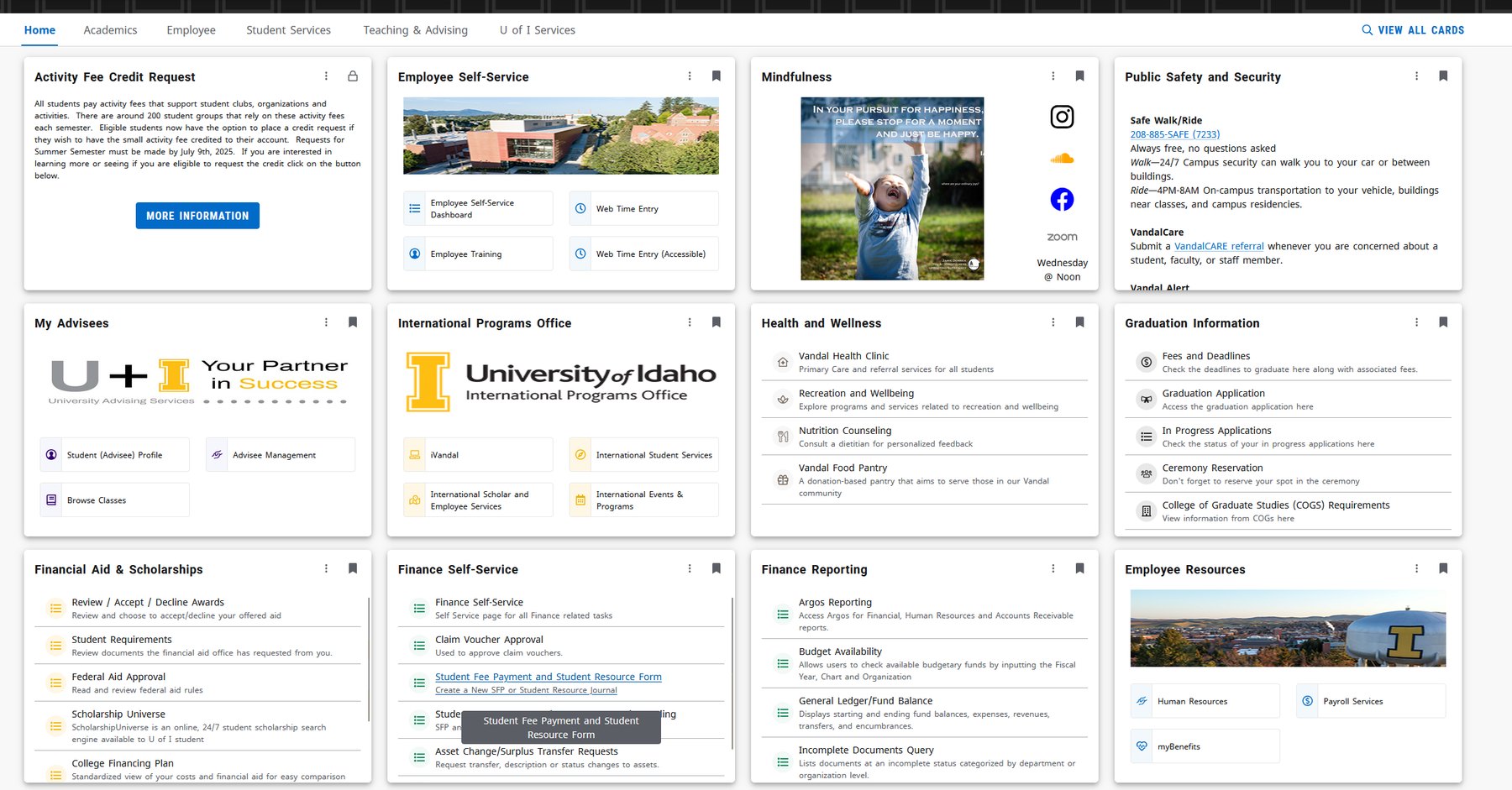
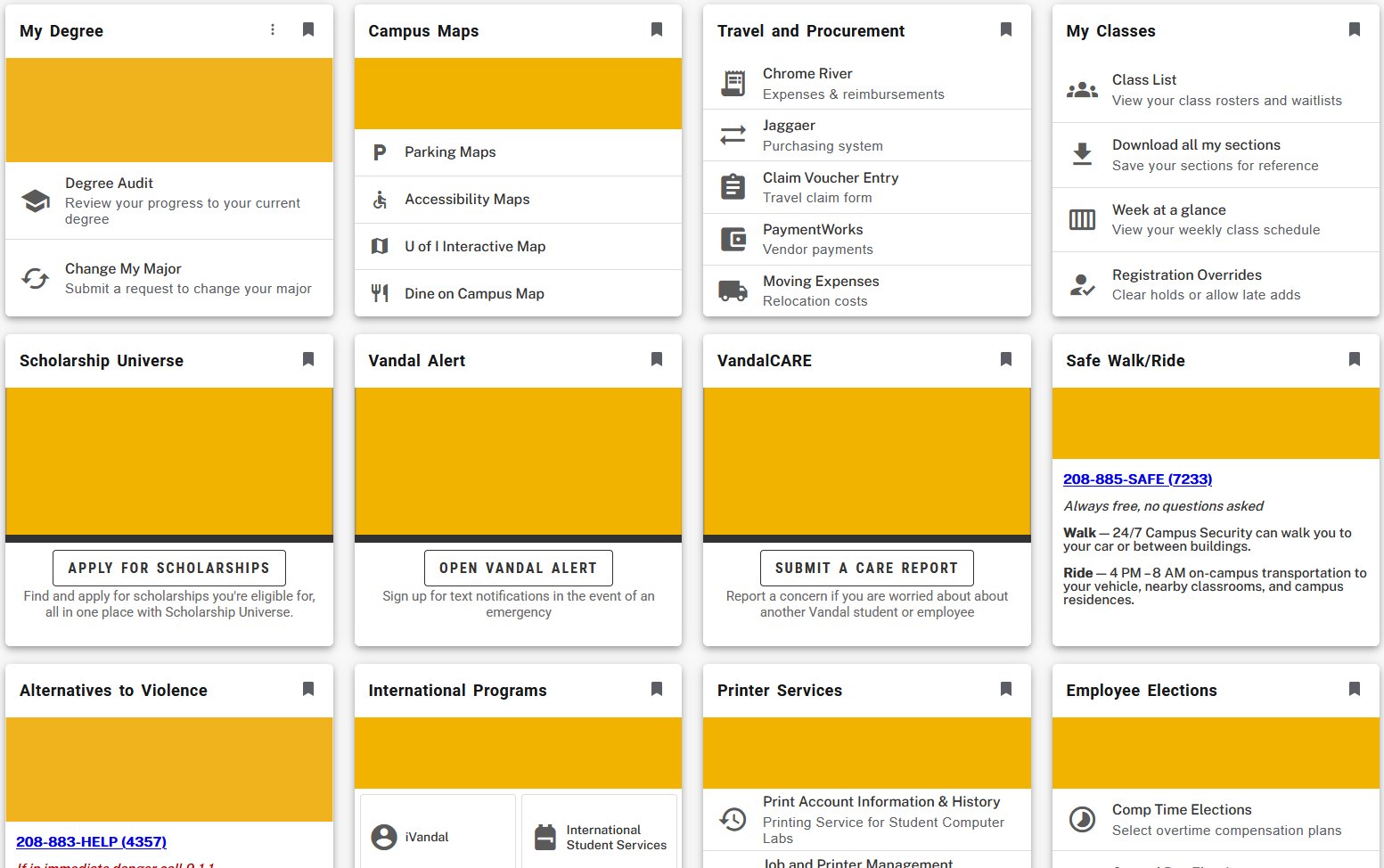
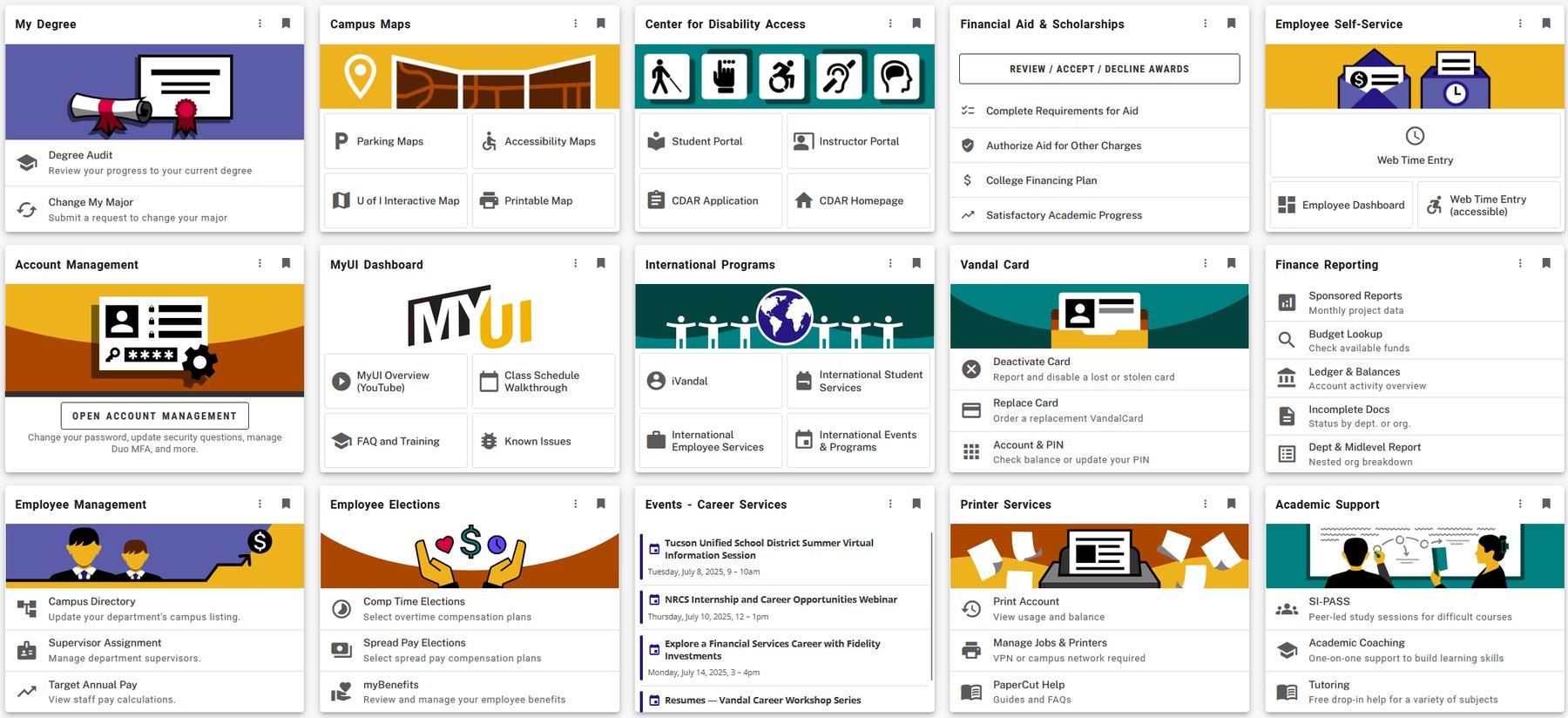
MyUI is the portal where University of Idaho students and staff go for registration, grades, financial aid, pay and campus services. I led its redesign as product manager, did the UI/UX design and built the cards myself.
47
In under six months4 to 1
Positive to negative2,000+
Wedding Master
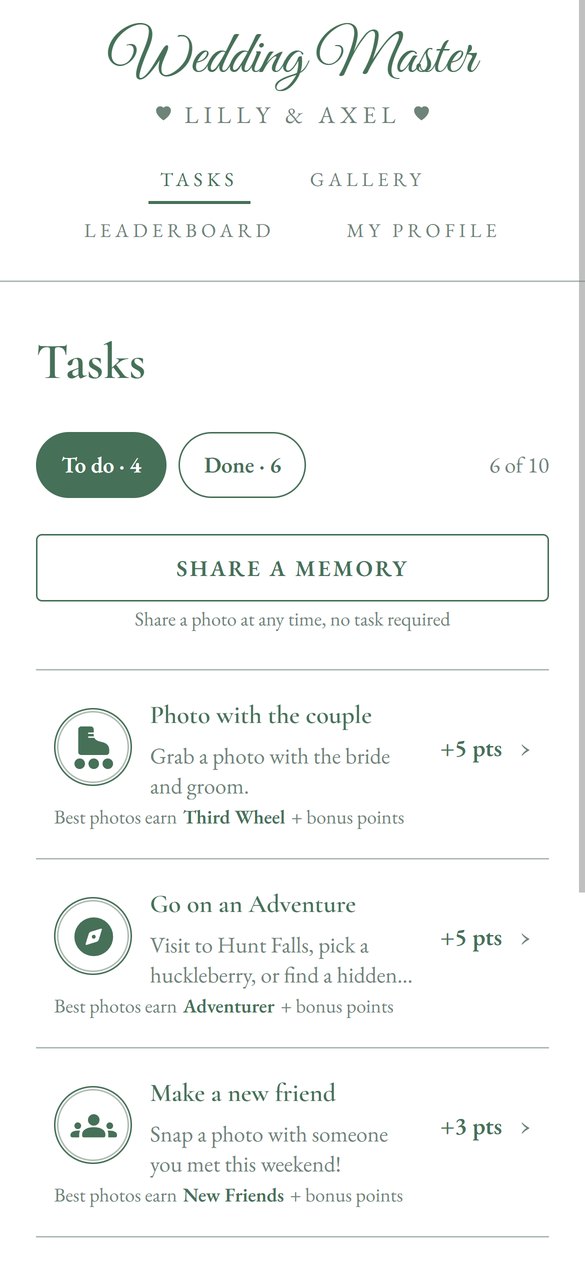
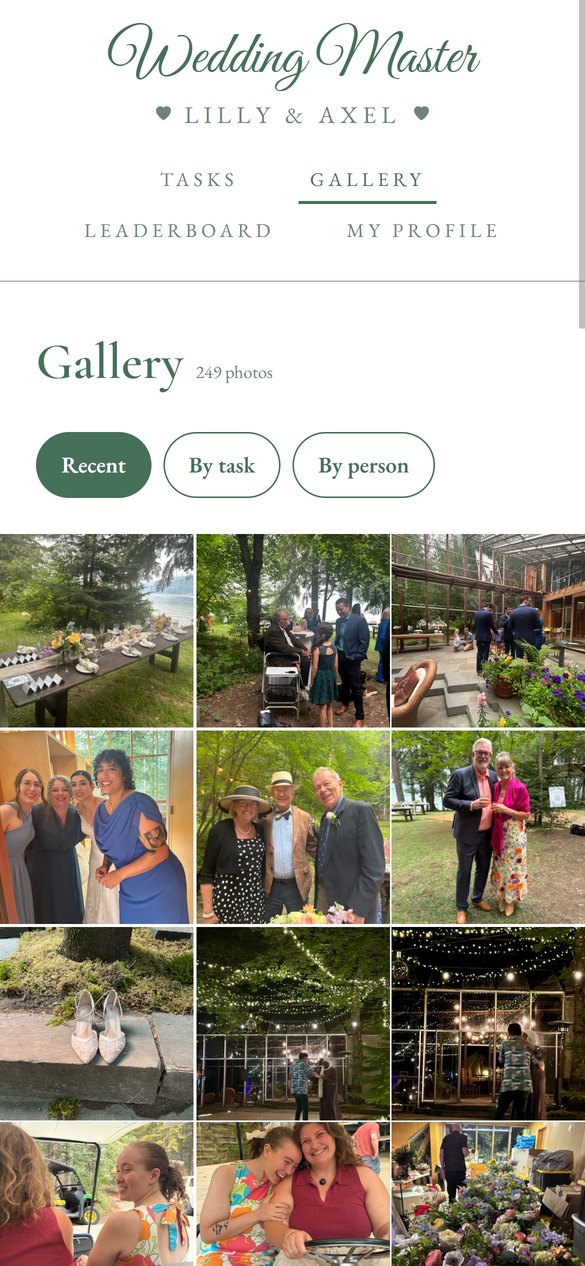
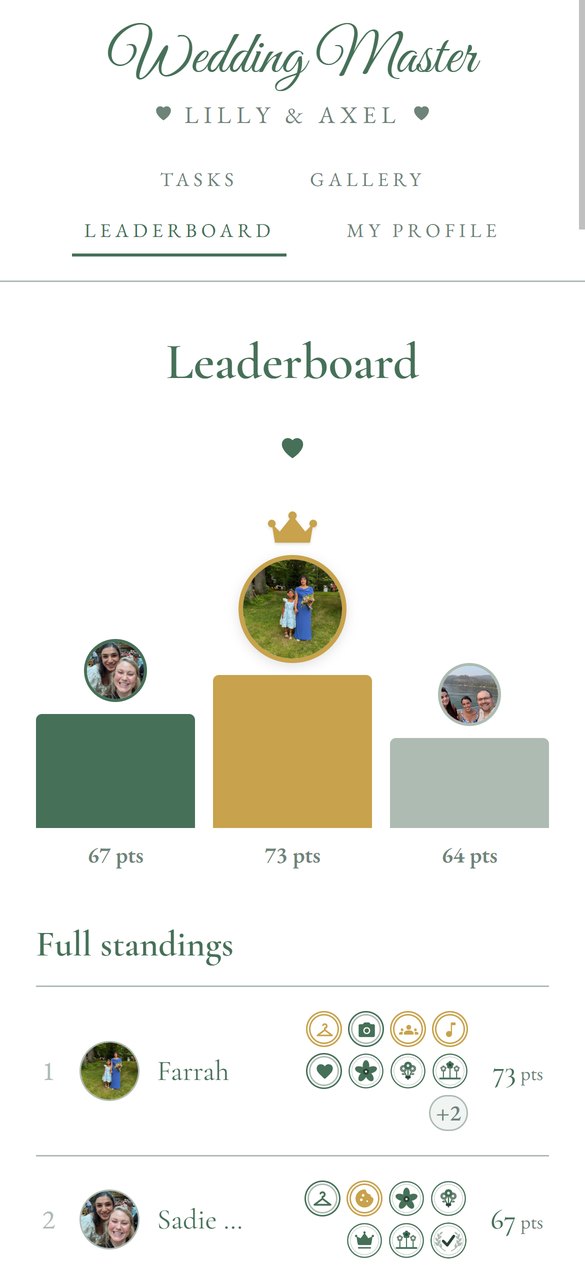
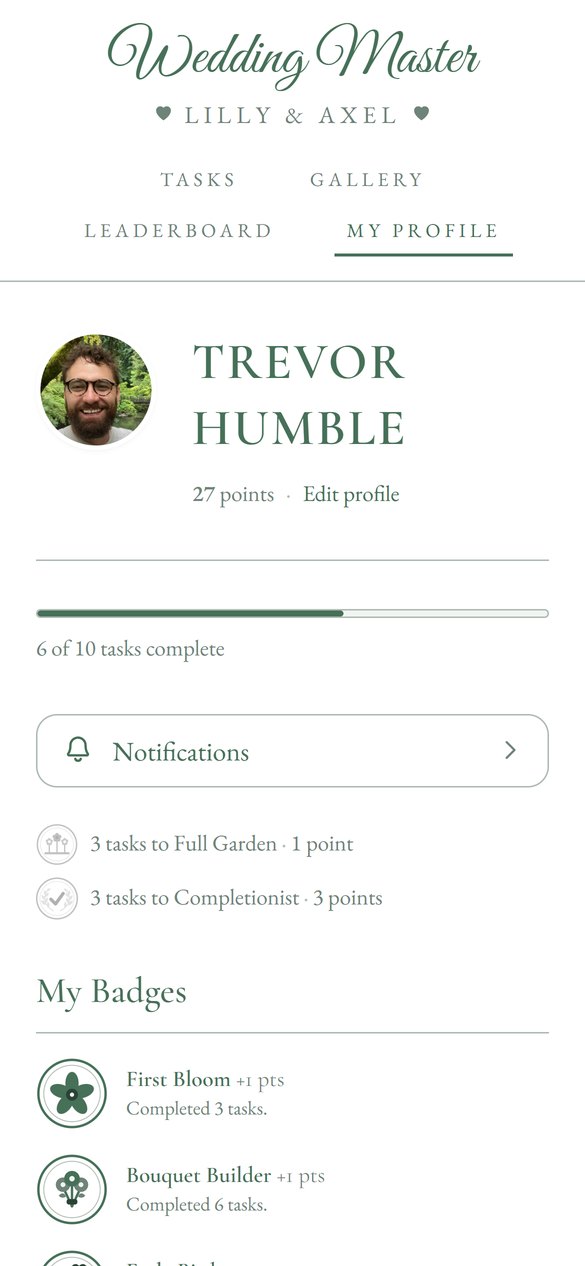
A photo game I built for a wedding of about 100 guests. Guests scanned one QR code, signed up without a password and earned points for photo tasks. It has badges, a leaderboard, a shared gallery and an end-of-night slideshow, and the host runs it all from an admin page.
49
Of about 10063%
Self-serve software: 34.6%47%
Typical community: 10%4.5%
Instagram brand posts: 0.36%Blender tools
Flatland
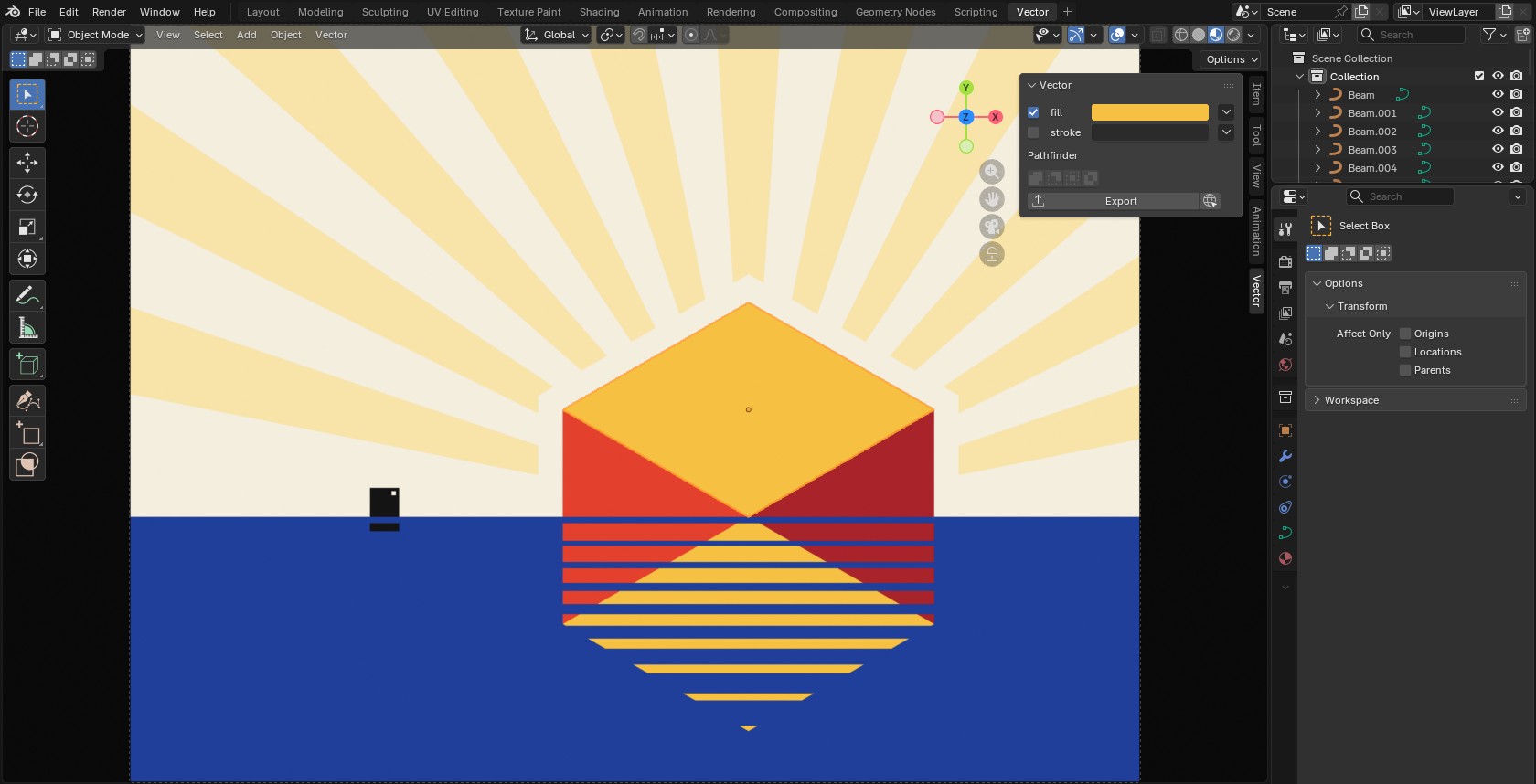
A Blender add-on and vector editor that enhances Blender’s curve tools and utilizes its strengths for a whole new way to work with vector graphics.
- Shape tools
- Pen and freehand
- Vector workspace
- Bevel corners
- Pathfinder
- Shape Builder
- Gradients
- Strokes
- Type
- True color
- SVG and PDF
- Browser preview
Scatter Camera
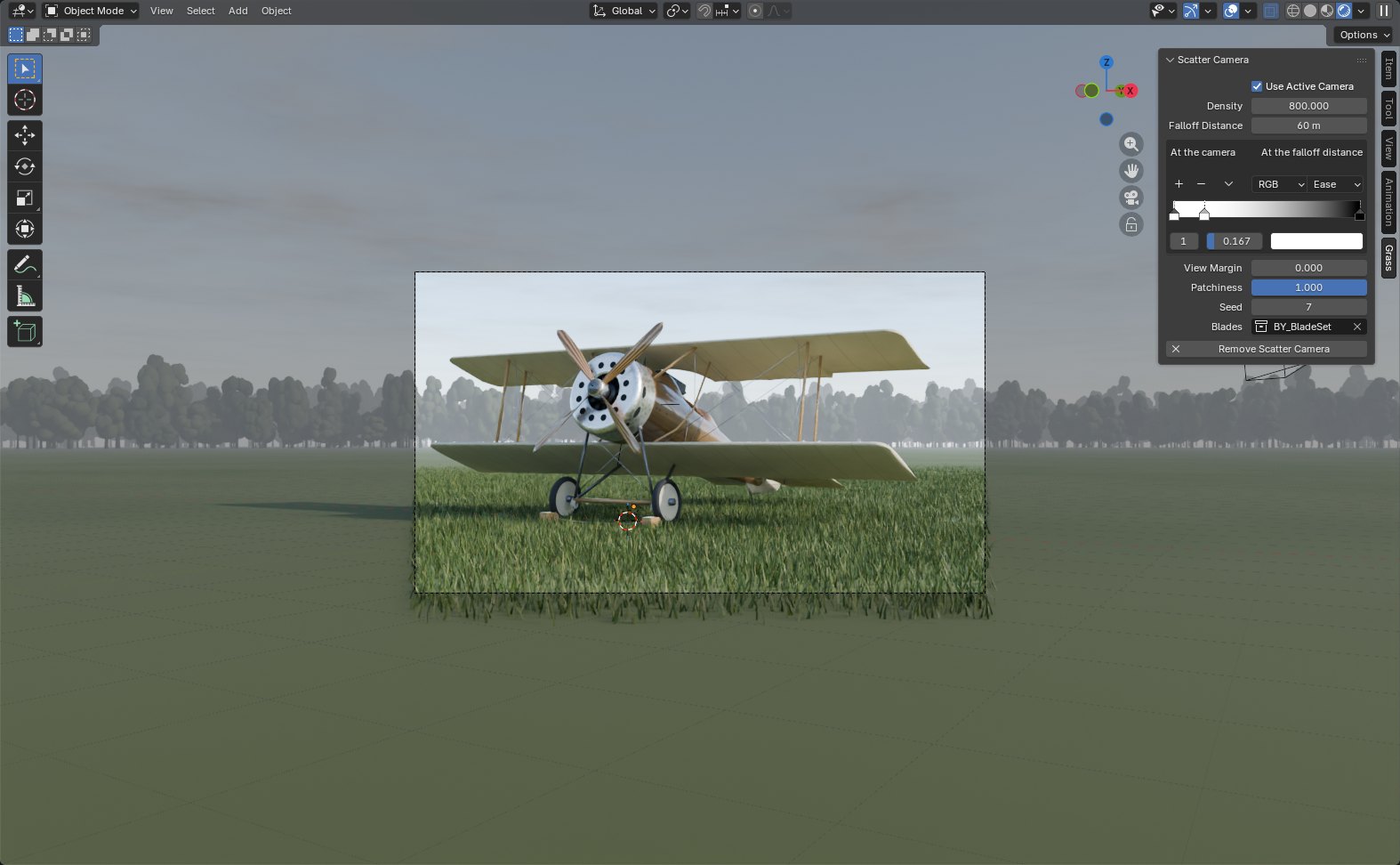
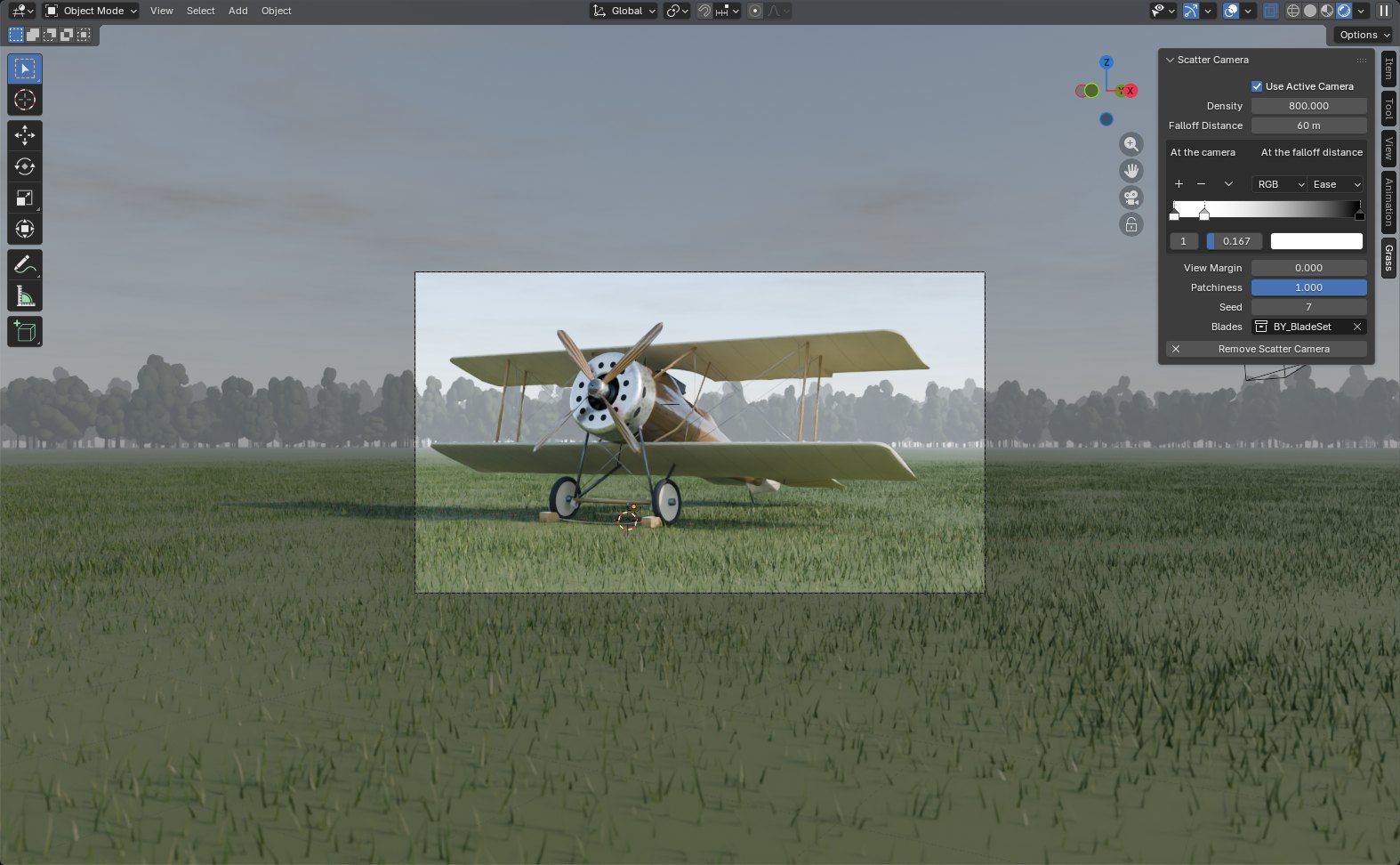
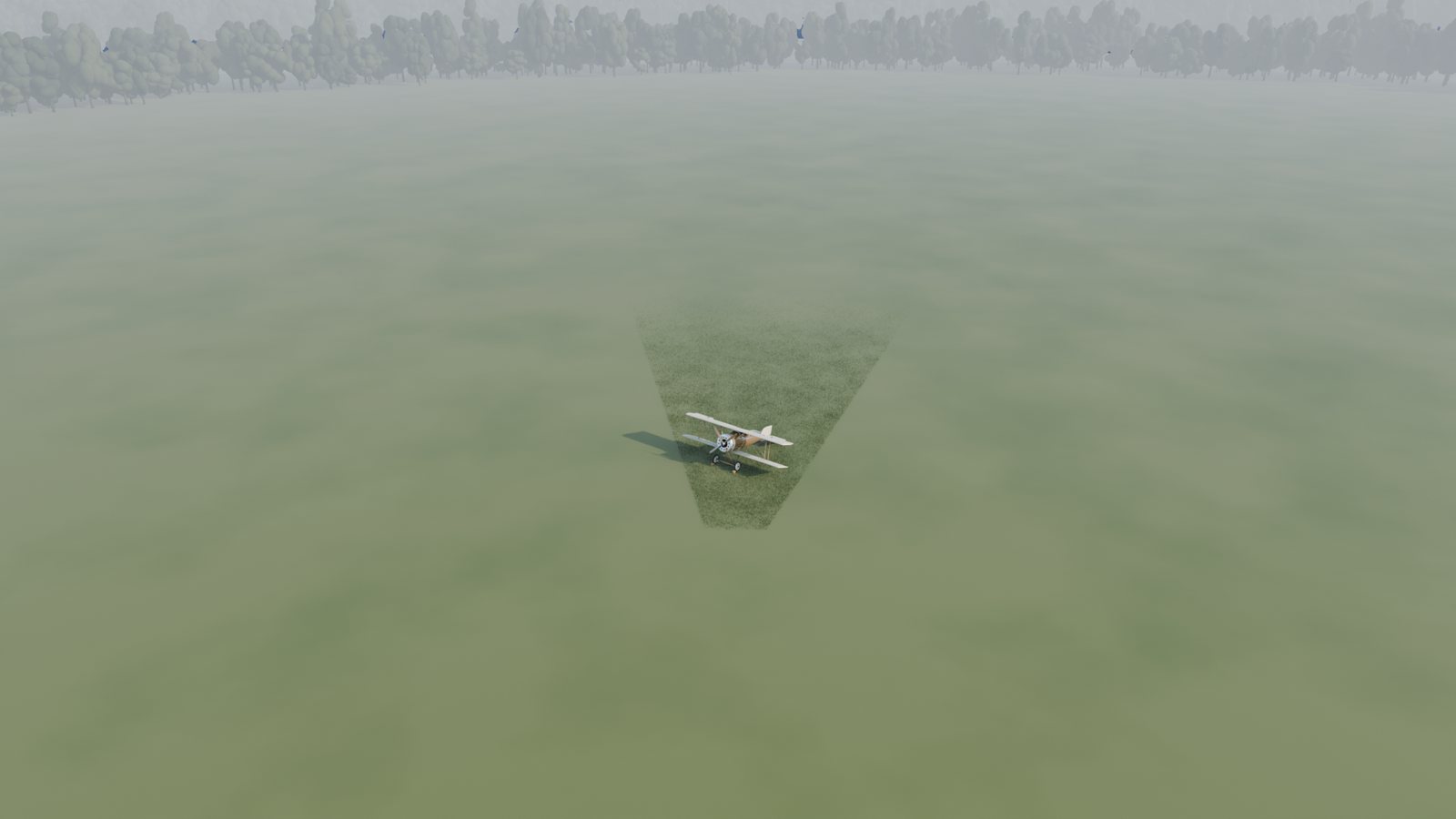
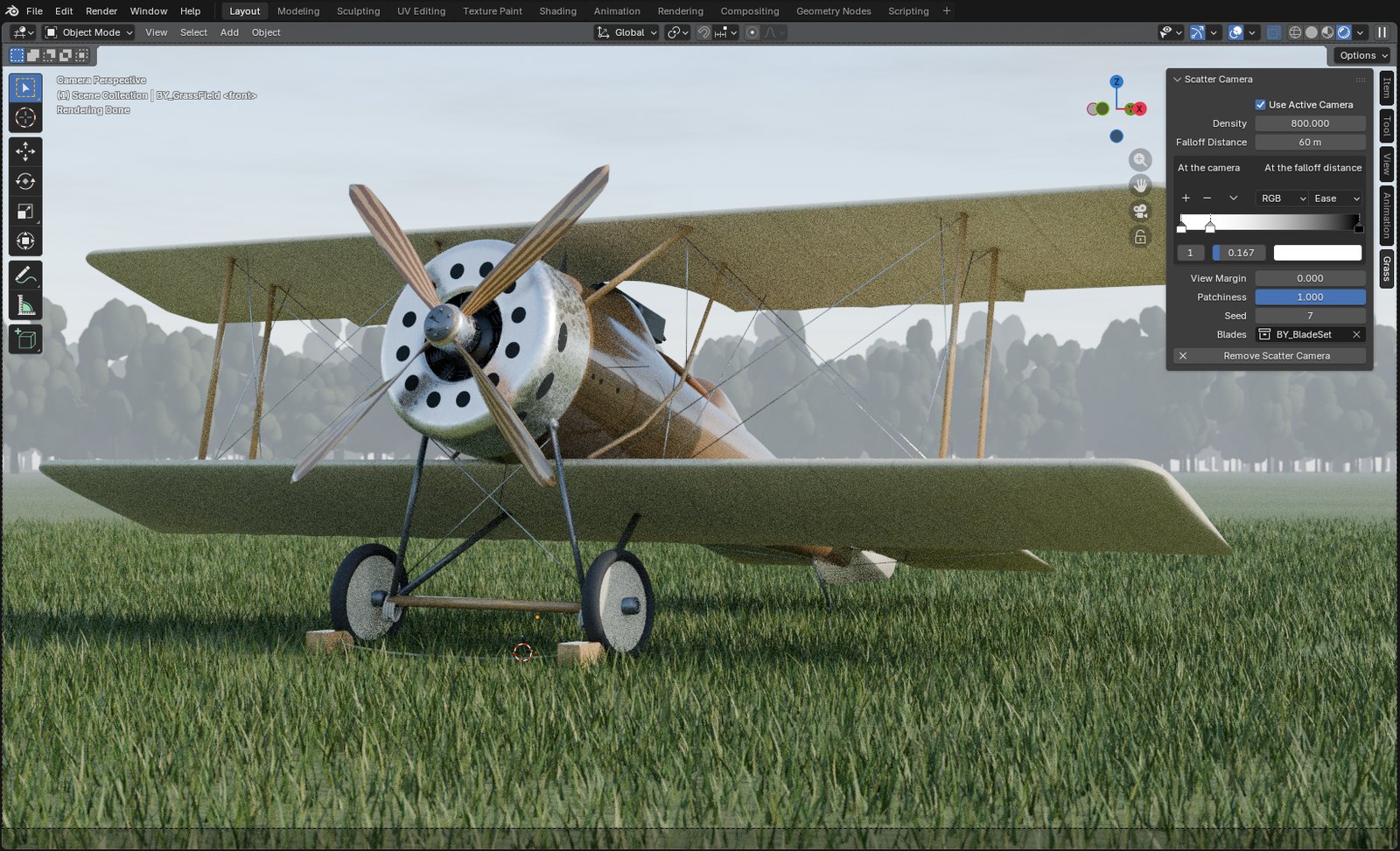
A field of grass slows Blender down, and most of it never appears in the shot. Scatter Camera grows grass only where the active camera is looking. Blades are thickest near the camera and thin out over a distance you set, and a black-to-white ramp controls how they fade.
866,381 blades
Whole field133,869 blades
Front shot0
Design
Animation, 3D, traditional and digital artAbout

I’m the technical product manager for AI applications and MyUI, the student portal, in the University of Idaho’s Office of Information Technology.
Before that I was assistant director and technical product owner for financial aid. I led the product side of upgrading every financial aid system for the 2024–25 FAFSA Simplification Act, work that earned our team the university’s Outstanding Team Award. I started in financial aid as a counselor in 2020.
Outside of work I build tools for Blender and make 3D art and animation. I’m working on a master’s in Integrated Architecture and Design, focused on animation and non-photorealistic rendering, and my animation Liminal Fields was shown at the Moscow Contemporary Art Gallery.
- linkedin.com/in/trevor-humble
- GitHub
- github.com/TrevorHumble
- [email protected]
Flatland
A Blender add-on and vector editor that enhances Blender’s curve tools and utilizes its strengths for a whole new way to work with vector graphics.
Core principles
- 1
The Tool is Accessible to All
Blender natives have access to all the familiar hotkeys, tools, and nodes they have learned to love, and newcomers can find tools in familiar and intuitive locations.
- 2
First-of-Their-Kind Tools
Turn a 3D scene into editable vector art, build artwork from nodes, and export animation as an SVG that plays in a browser.
- 3
Workflow Agnostic
The work can be done from first shape to finished product inside Blender, or it can be easily ported into other tools for further editing and finishing.
- 4
Enhanced Blender Curves
Shape building, path editing and vector bevels work on Blender’s own curves.
Demos
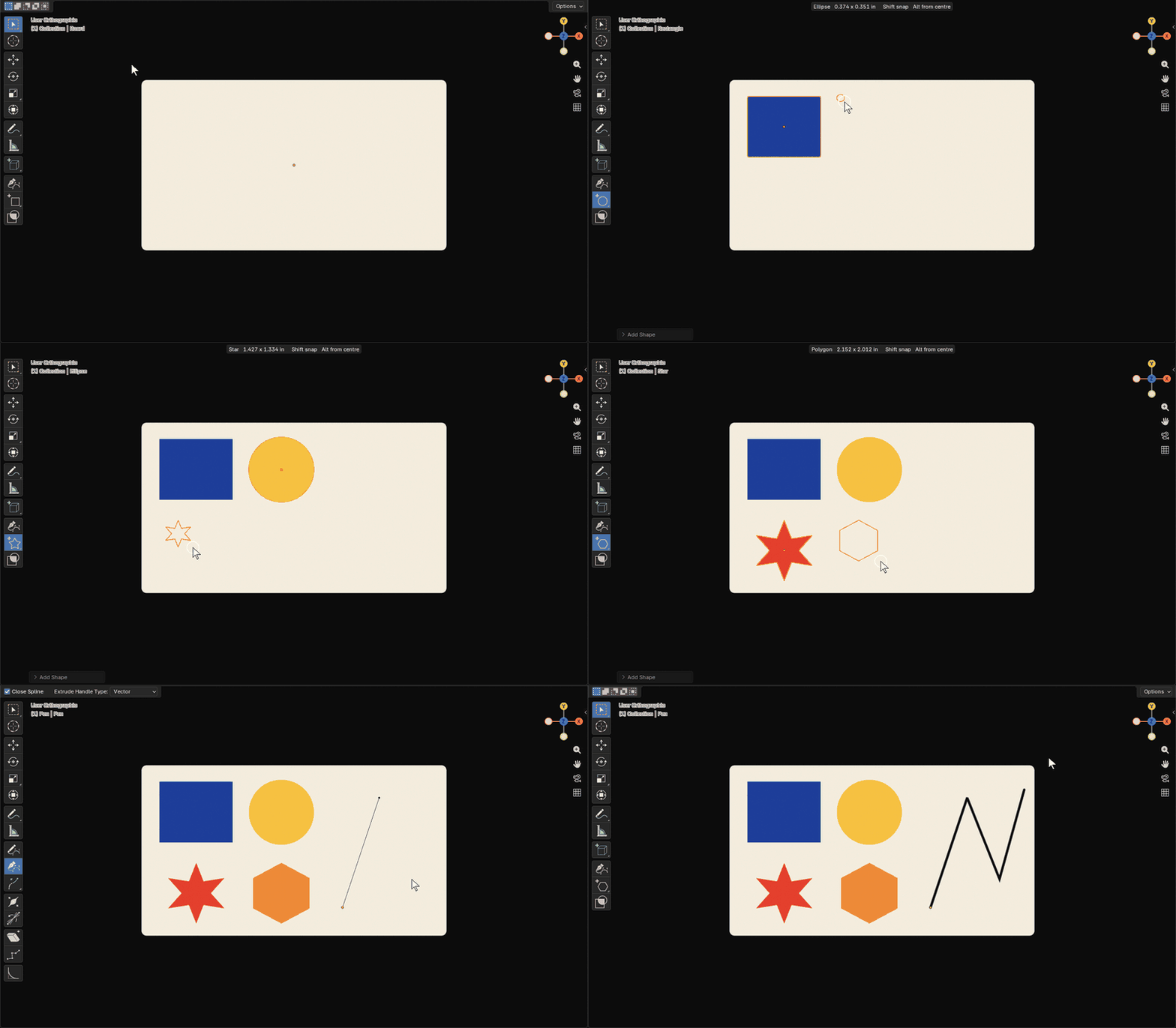
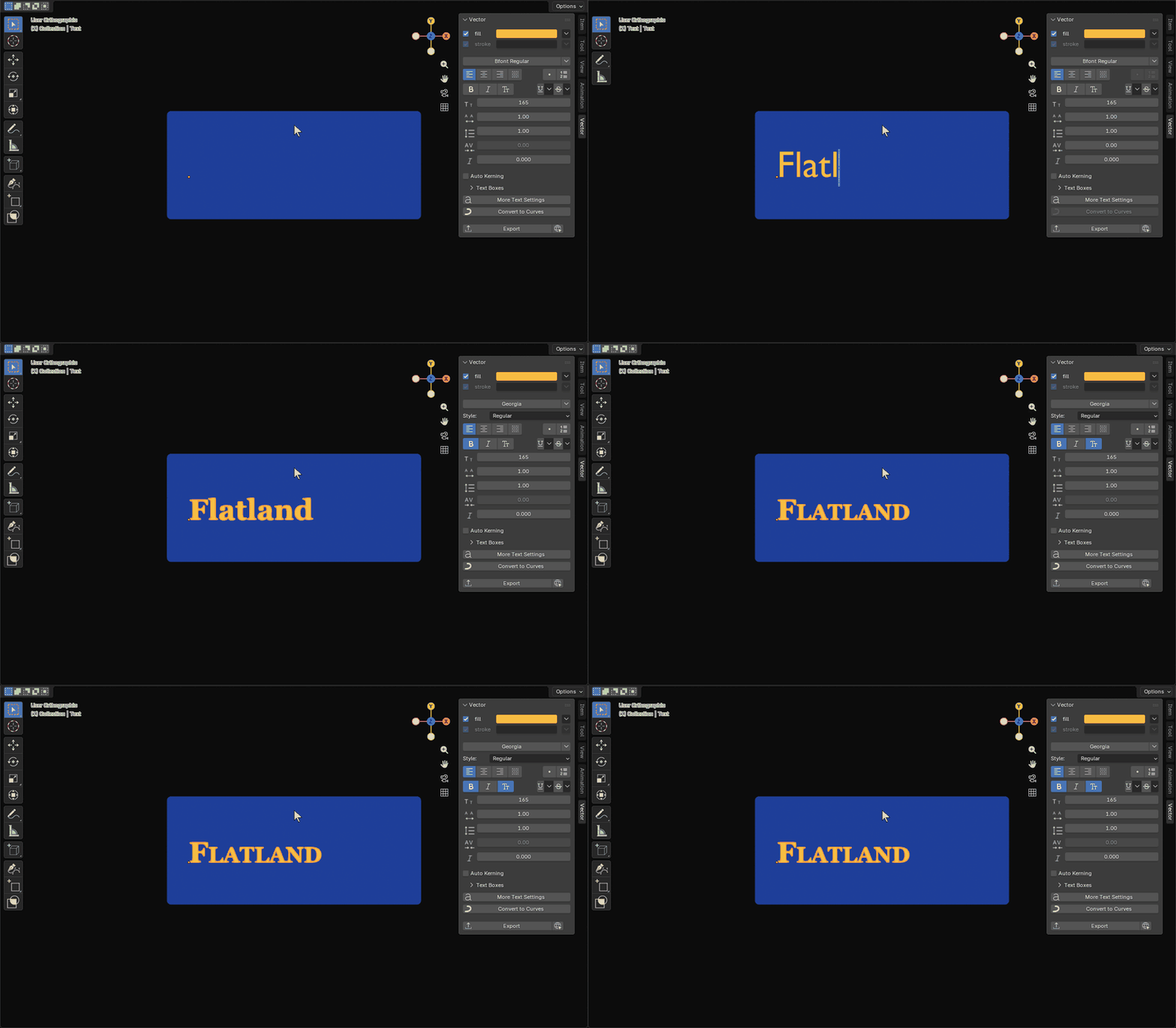
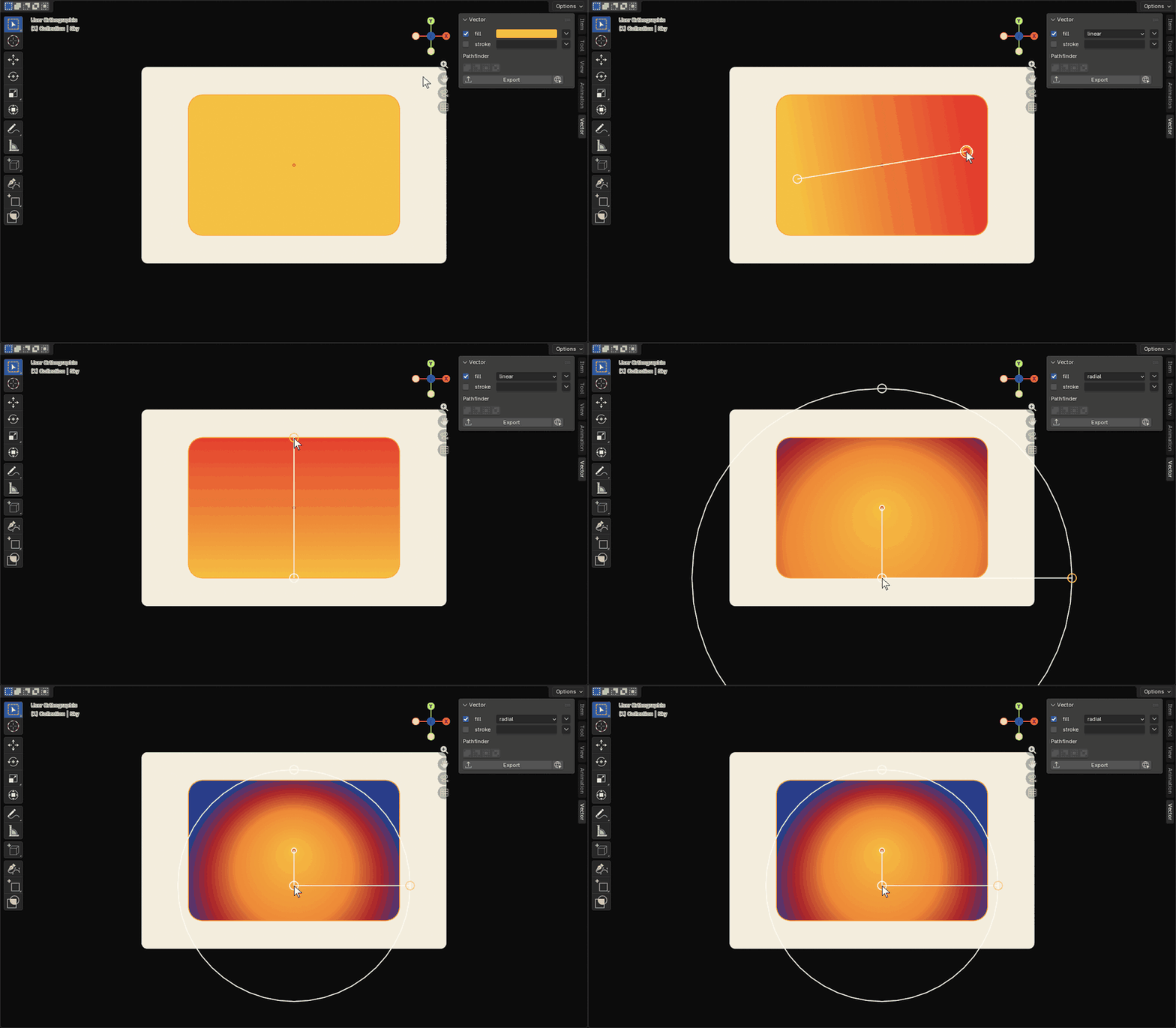
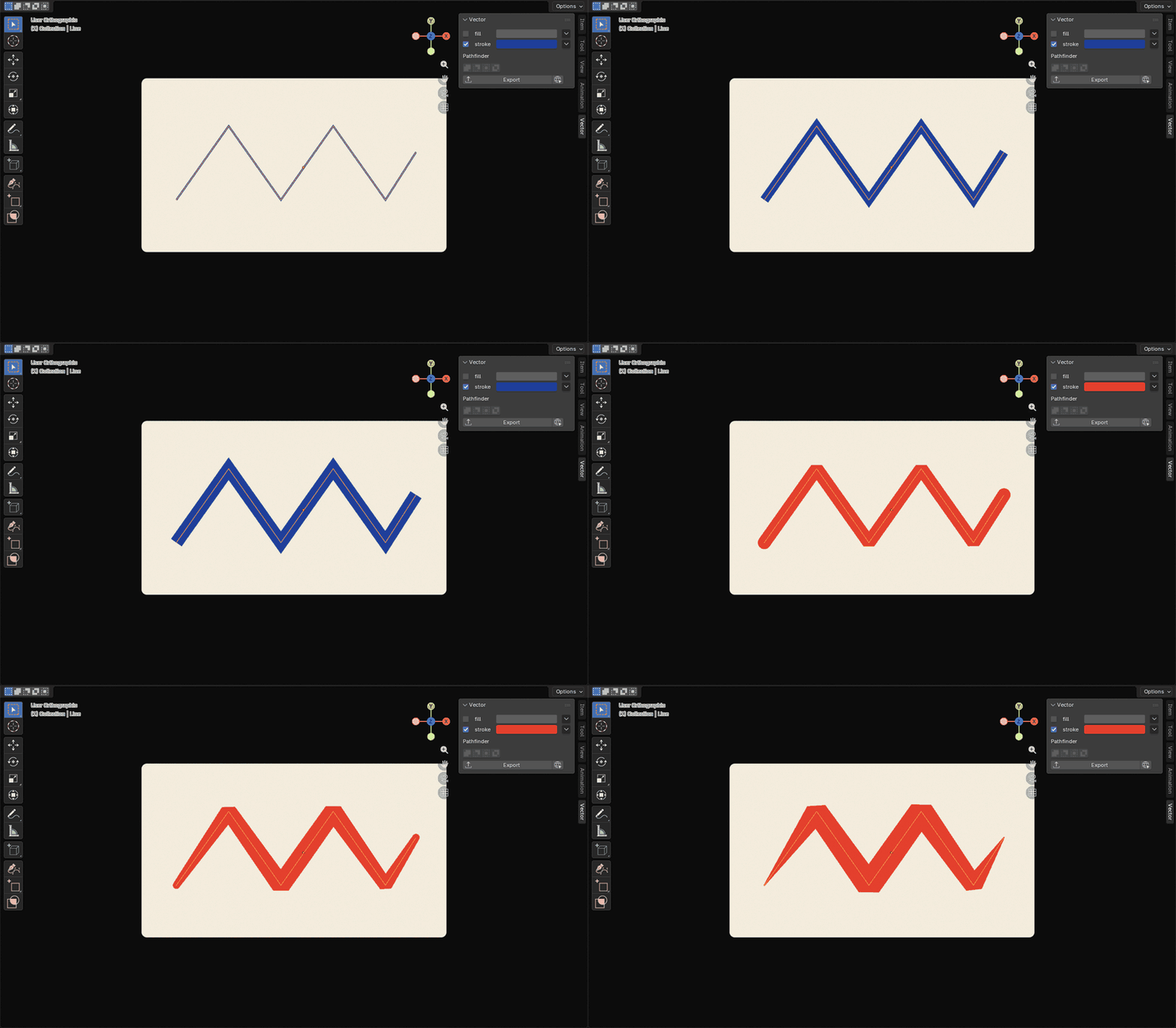
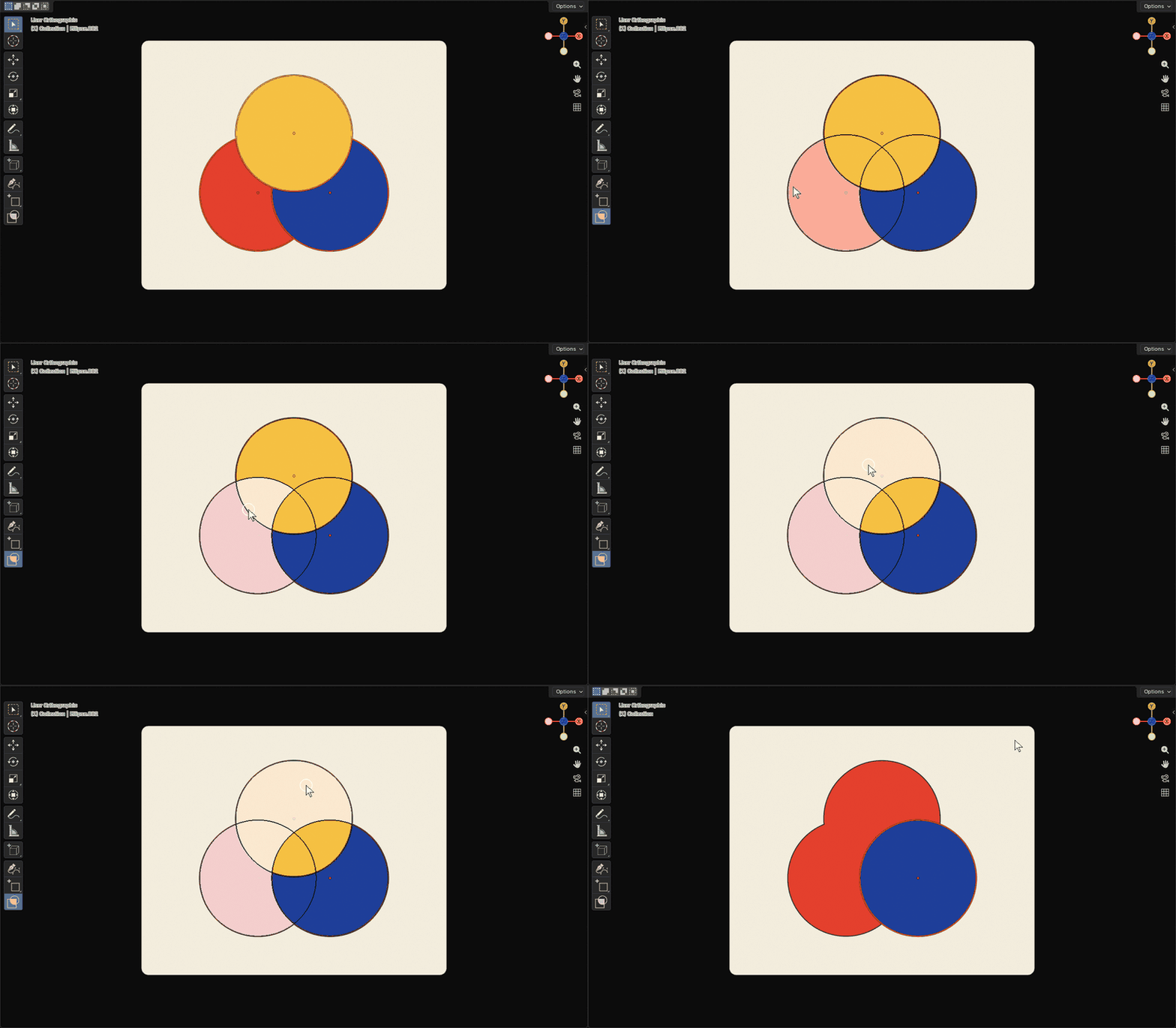
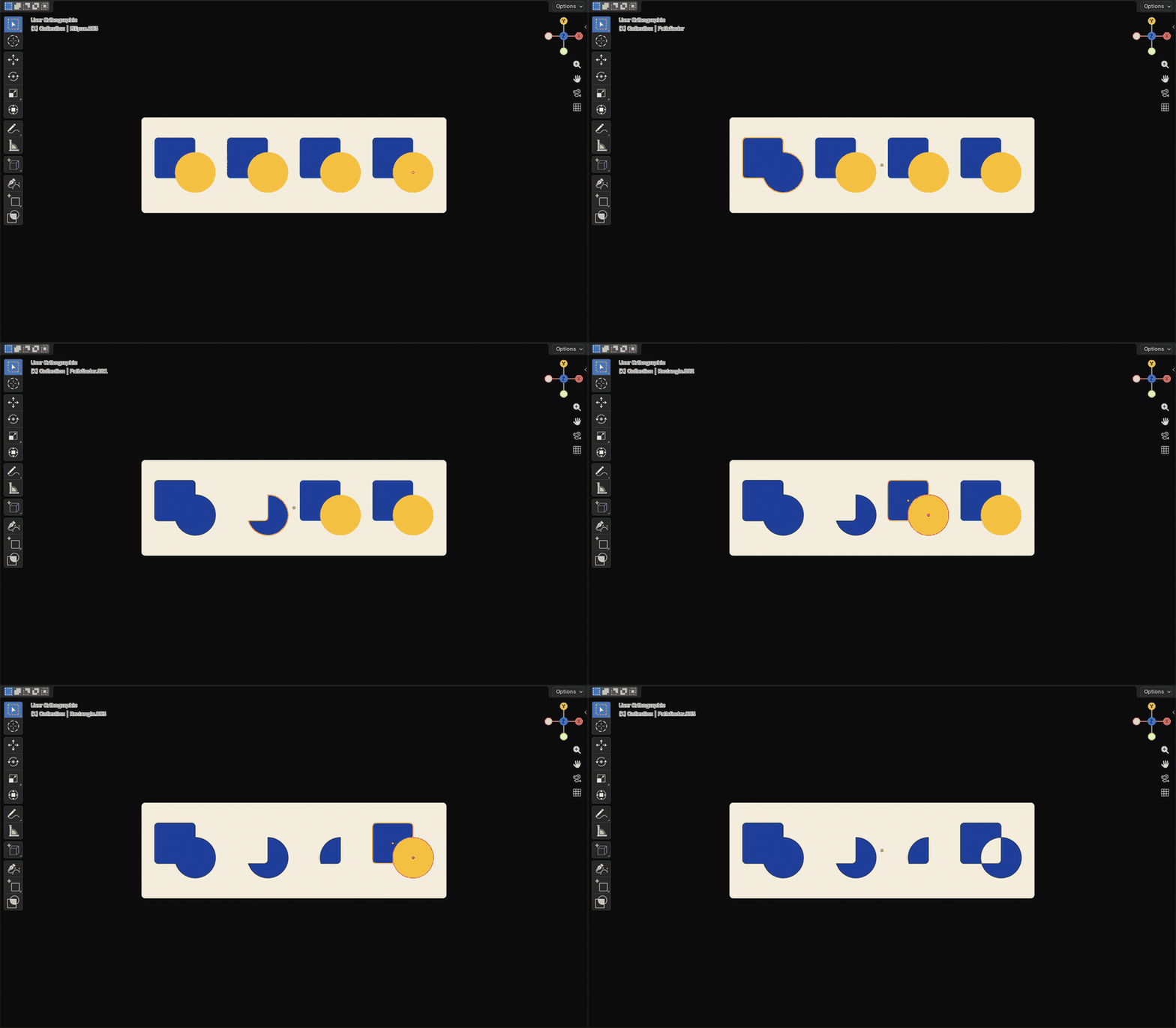
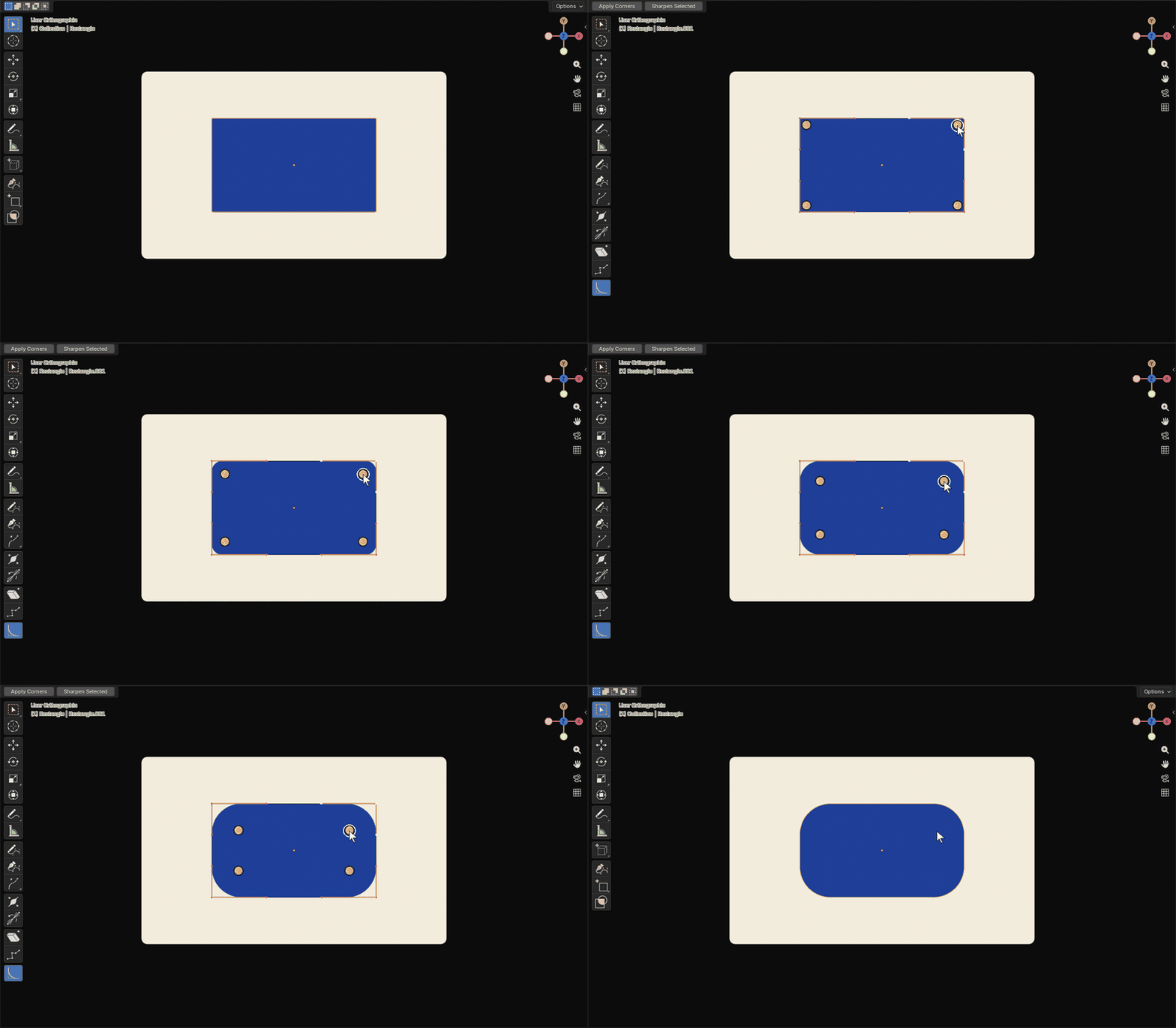
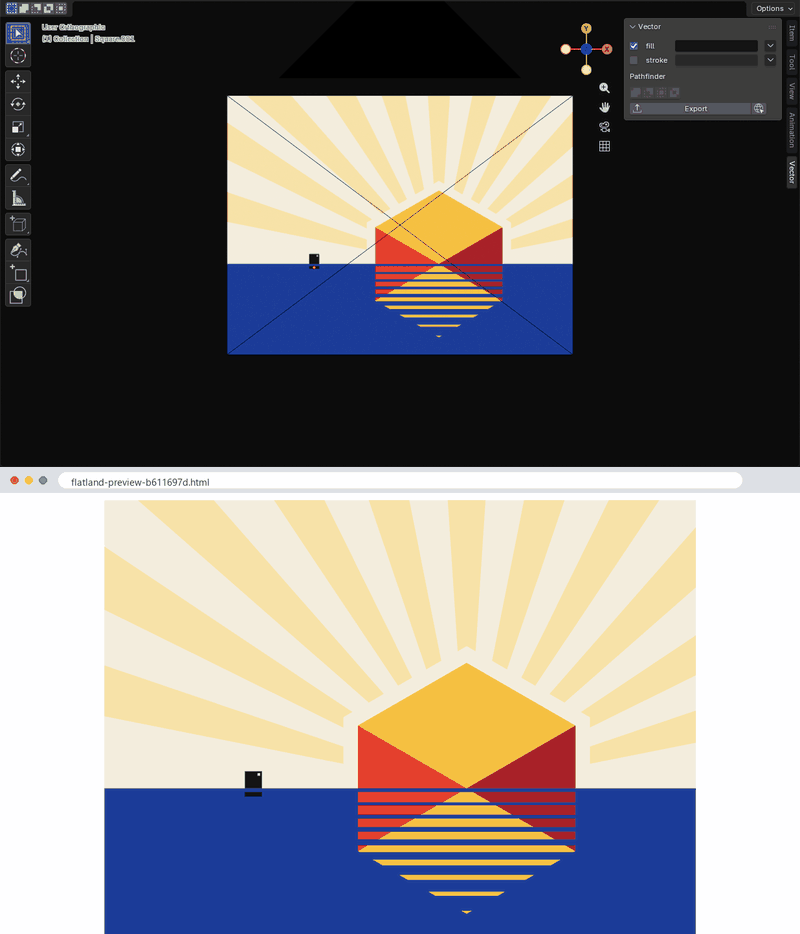
- Tools sit in Blender’s toolbar with Blender-style hotkeys, in a Vector workspace set up for flat work.
- The color you pick is the color on screen and in the exported file.
- Strokes can sit inside, on or outside the edge of a shape.
Planned features
Drawing and editing
- Clipping masks
- Dashed and dotted strokes, and arrowheads
- Turn a stroke into an editable shape
- Mirror editing and snapping
- Bevel on any curve, not only Flatland shapes
- A curvature tool for reshaping paths by dragging anywhere
- A blend tool that builds steps between two shapes
Type
- Text as editable curves
- Bullets and numbering
- Text that stays real text in SVG and PDF
Files and layout
- SVG import as editable shapes
- .ai and .eps import
- A panel showing the SVG code
- Layers, groups and artboards
- Reusable symbols from Blender's Asset Browser
Future
- A 3D scene becomes editable vector art
- Animation that exports as an SVG that plays in a browser
- Artwork built by Blender's geometry nodes
- Modifiers and node-based materials on vector art
- Image trace: a picture in, editable shapes out
From the prototype lab
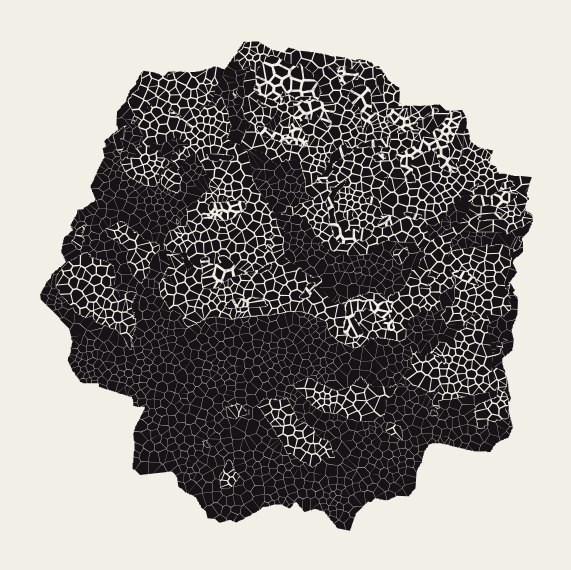
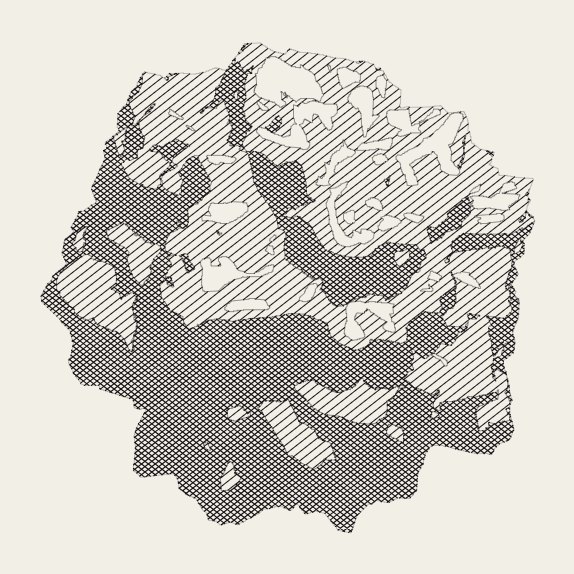
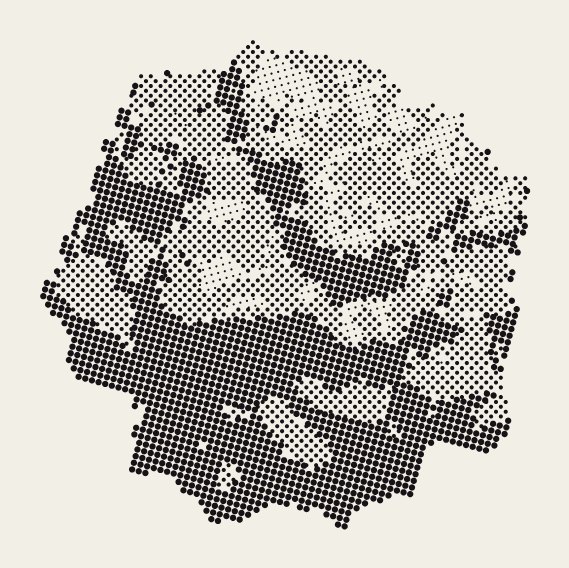
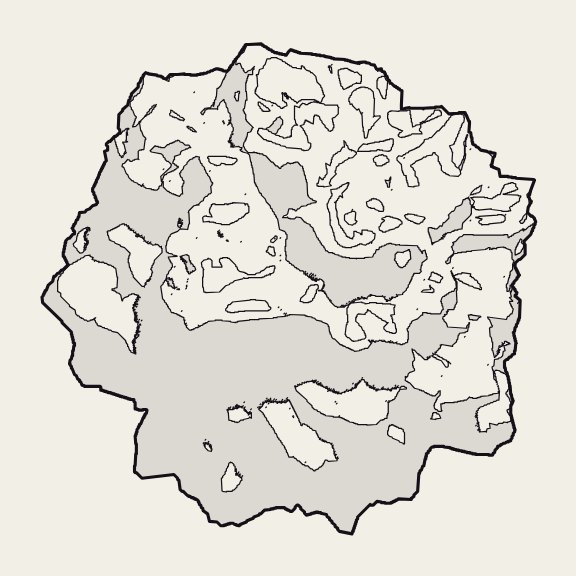
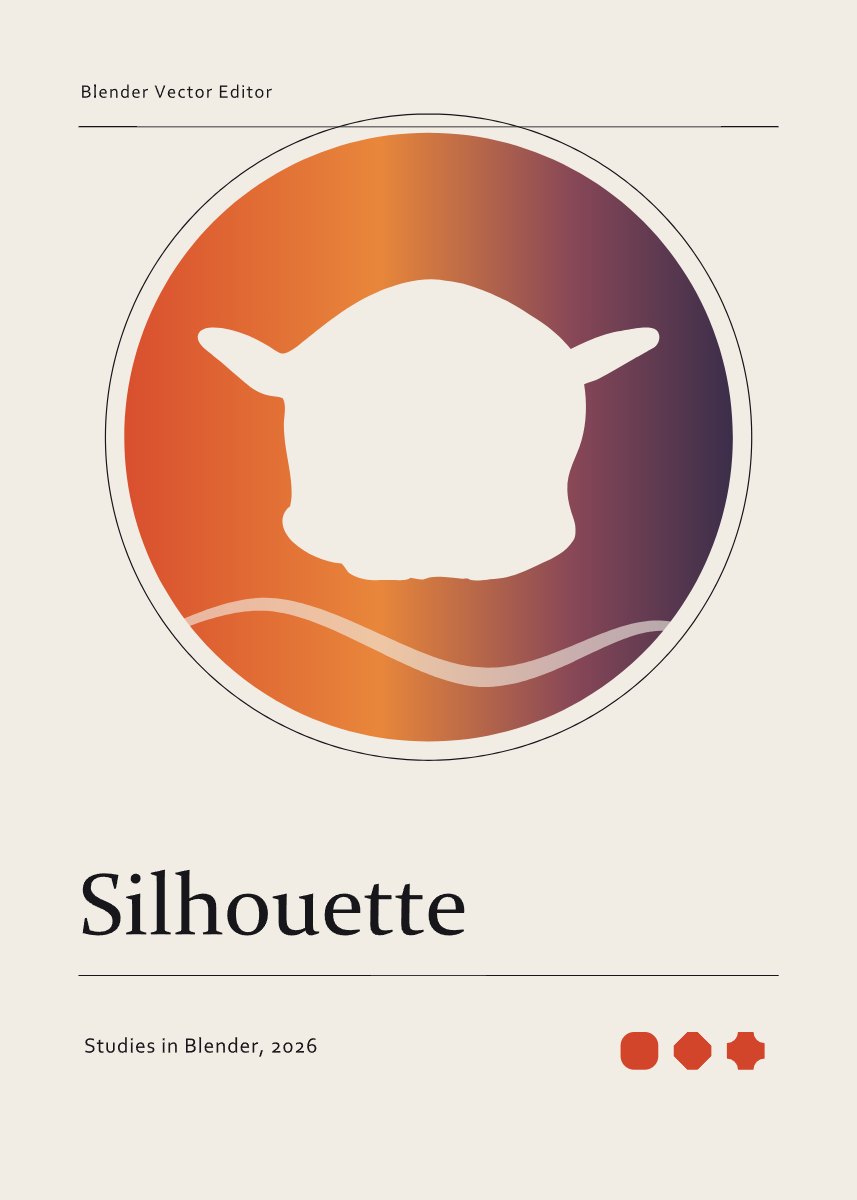
Early experiments, not in the add-on yet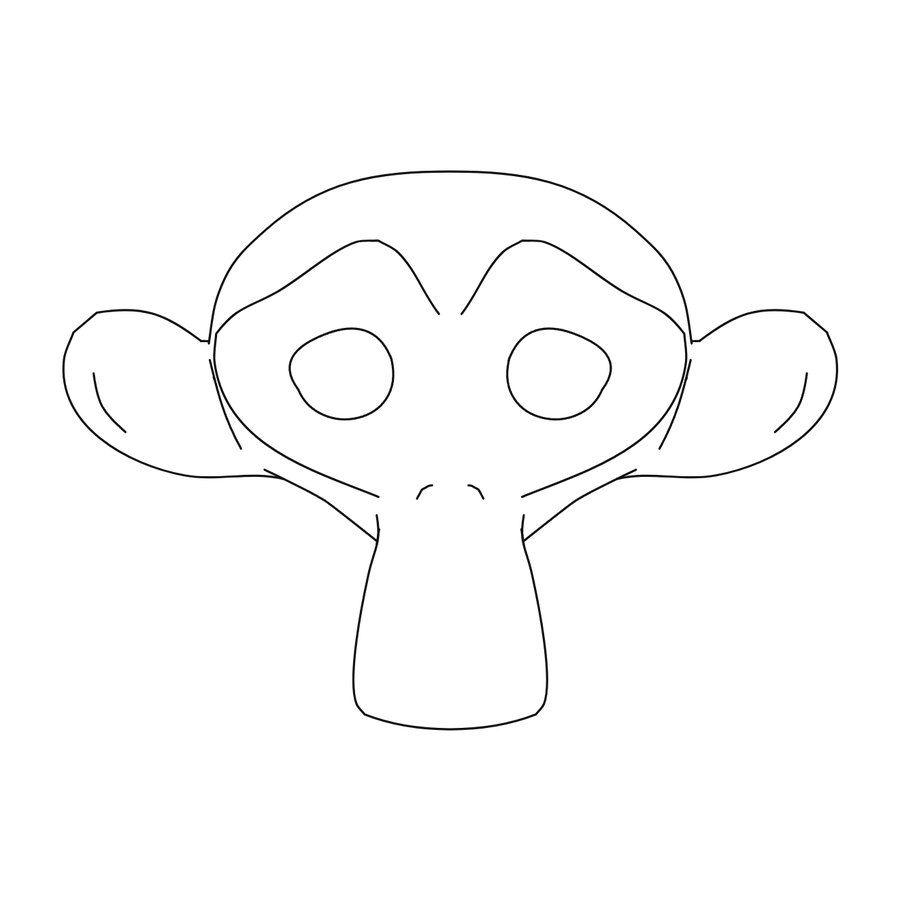
MyUI redesign
- Role
- Product manager, UI/UX design, development
- Team
- Me, a UI/UX consultant and two UI/UX interns
- Built with
- HTML, CSS and JavaScript cards in Ellucian Experience
- Presentation at Ellucian Live
- “Mastering UI/UX in Ellucian Experience: No-Developer Design That Delivers,” on how we ran this redesign without developer time
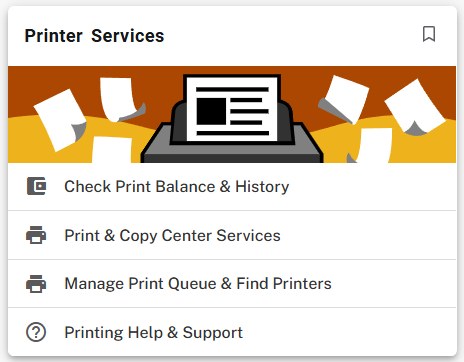
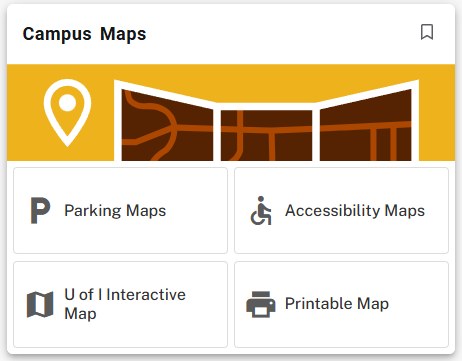
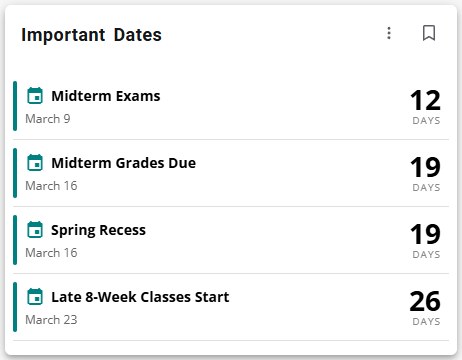
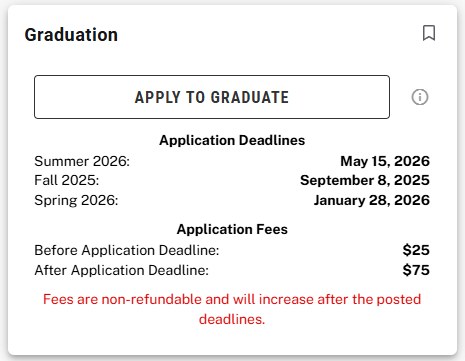
MyUI is the portal where University of Idaho students and staff go for registration, grades, financial aid, pay and campus services. I led its redesign as product manager.
We had a UI/UX consultant, two UI/UX interns and a Figma license, but no developer time. So I did the UI/UX design and built the cards myself in HTML, CSS and JavaScript, outside the normal sprint system. One of the interns drew the banner art for each card.
We told people about the change early and often, through portal announcements, newsletters, student groups and staff and faculty councils. Short surveys in the portal got people ready for it, and we ran usability tests and focus groups along the way.
47
In under six months4 to 1
Positive to negative2,000+
Design principles
Accessibility
WCAG AA color contrast, HTML a screen reader can follow, visible keyboard focus, alt text and large touch targets.
Layout
No scrolling inside a card, no cut-off text, and three to five actions per card.
Graphics
Vector graphics that stay sharp and never stretch. Each banner marks its card, so people find what they need while scanning.
Card templates
I published six templates so other schools on Ellucian Experience can build cards the same way. Templates on GitHub


Wedding Master
A photo game I built for a wedding of about 100 guests. Guests scanned one QR code, signed up without a password and earned points for photo tasks. It has badges, a leaderboard, a shared gallery and an end-of-night slideshow, and the host runs it all from an admin page.
Real screens from the wedding, shared with the couple’s permission.
Core principles
- 1
Fun
It had to be fun enough that guests kept playing on their own, but never so demanding that it kept everyone’s nose in their phone.
- 2
Easy to Join
Any guest, grandparents included, could start playing seconds after tapping a link, with no app, account or password.
- 3
Hosts in Charge
The couple could add or change tasks on the day and hide or remove any photo, with no tech help.
- 4
One Shared Record
Every photo went into one gallery, the favorites played as a slideshow, and everything downloaded as a keepsake.
User statistics
Guests shared 249 photos, 84% of them during the wedding weekend itself, and left 544 likes, more than two per photo.
Color themes
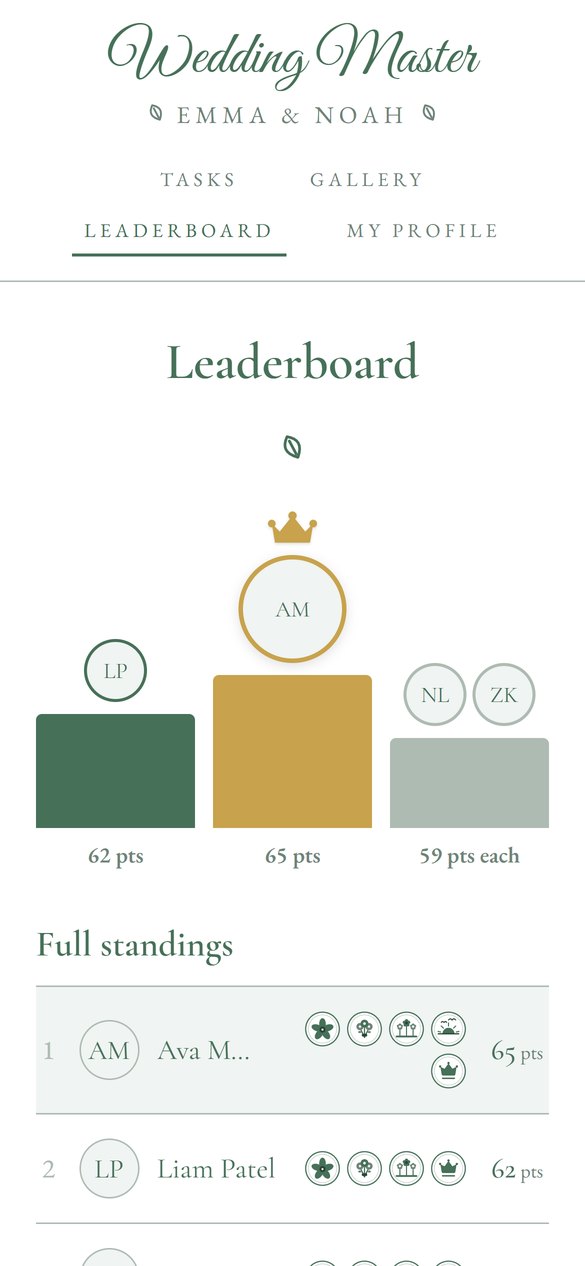
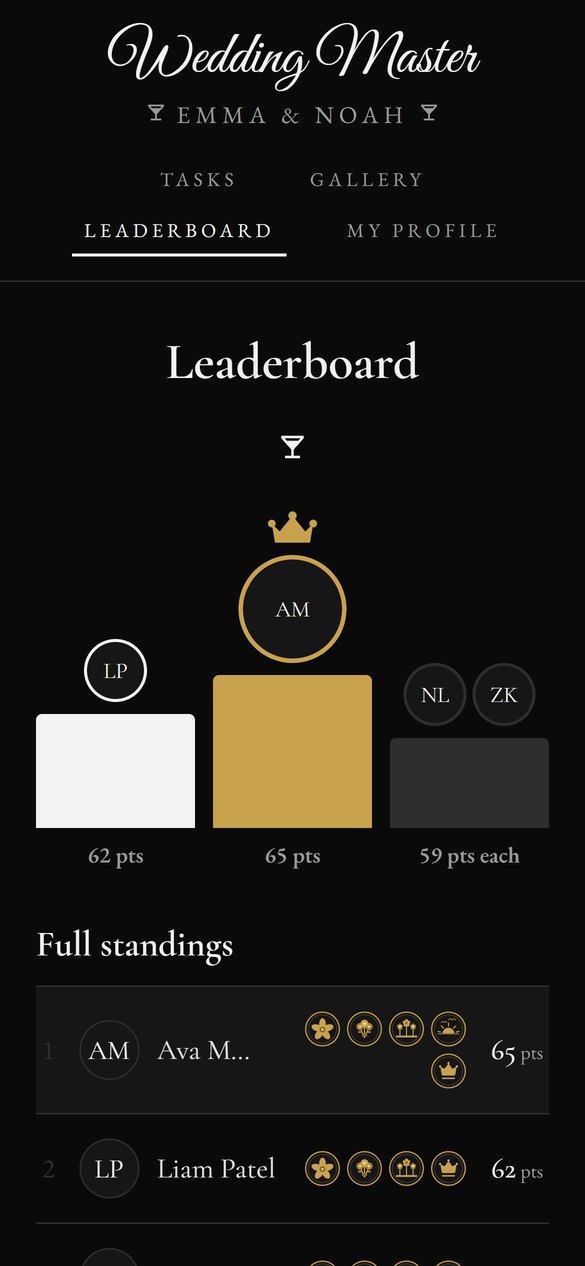
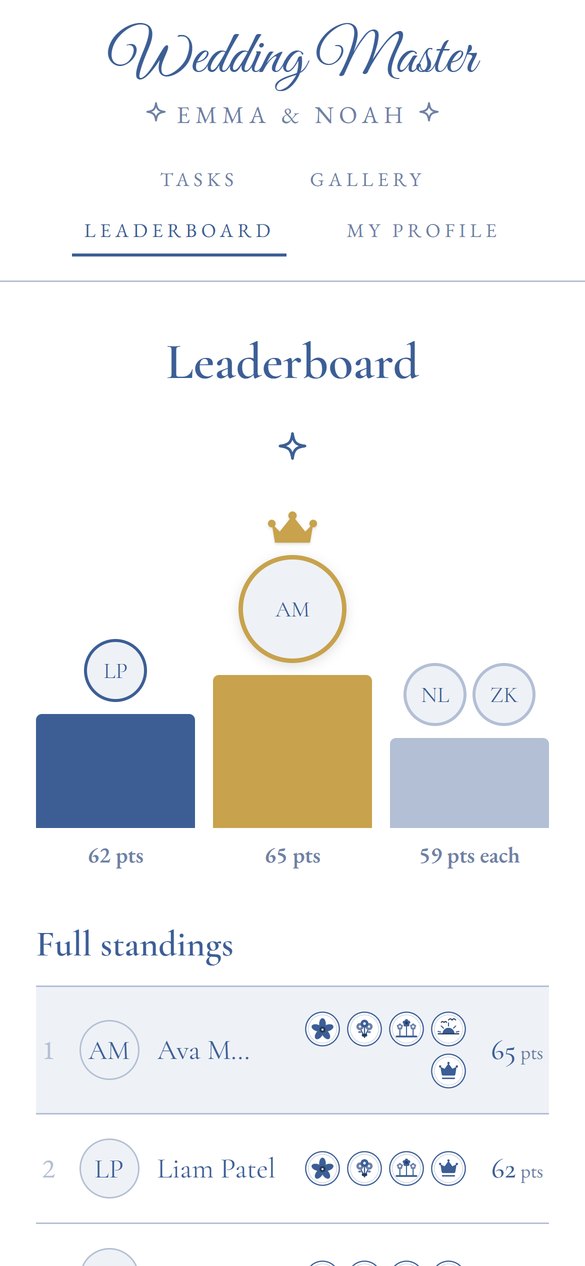
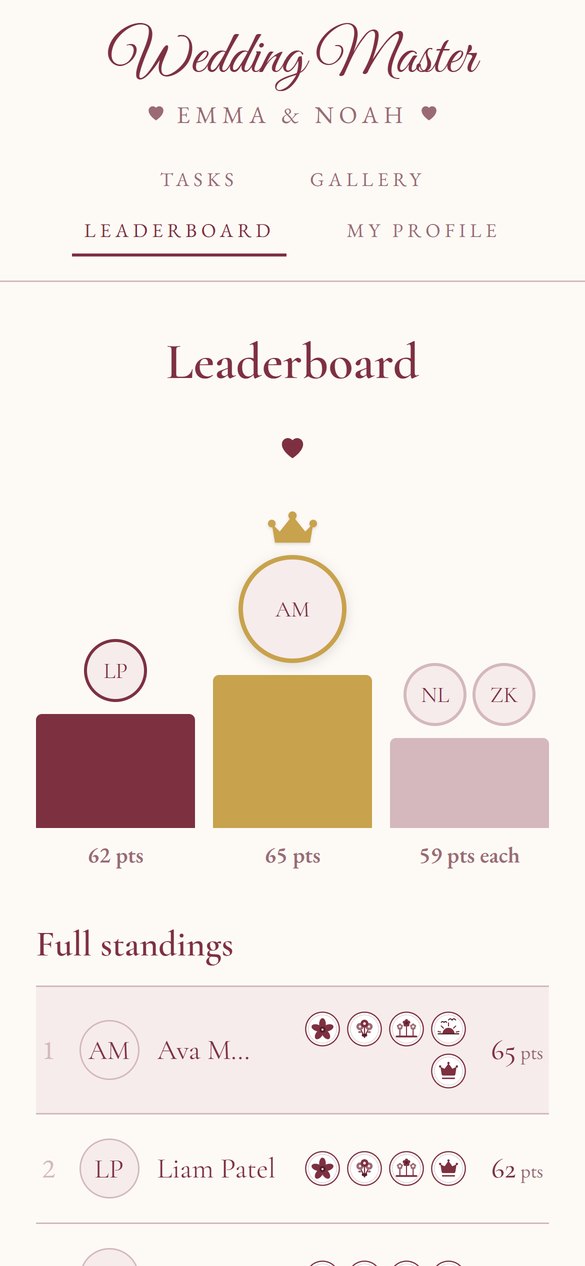
Shown with sample guestsThe host picks a color theme and a symbol from the admin page, and the whole app changes to match, badges included.
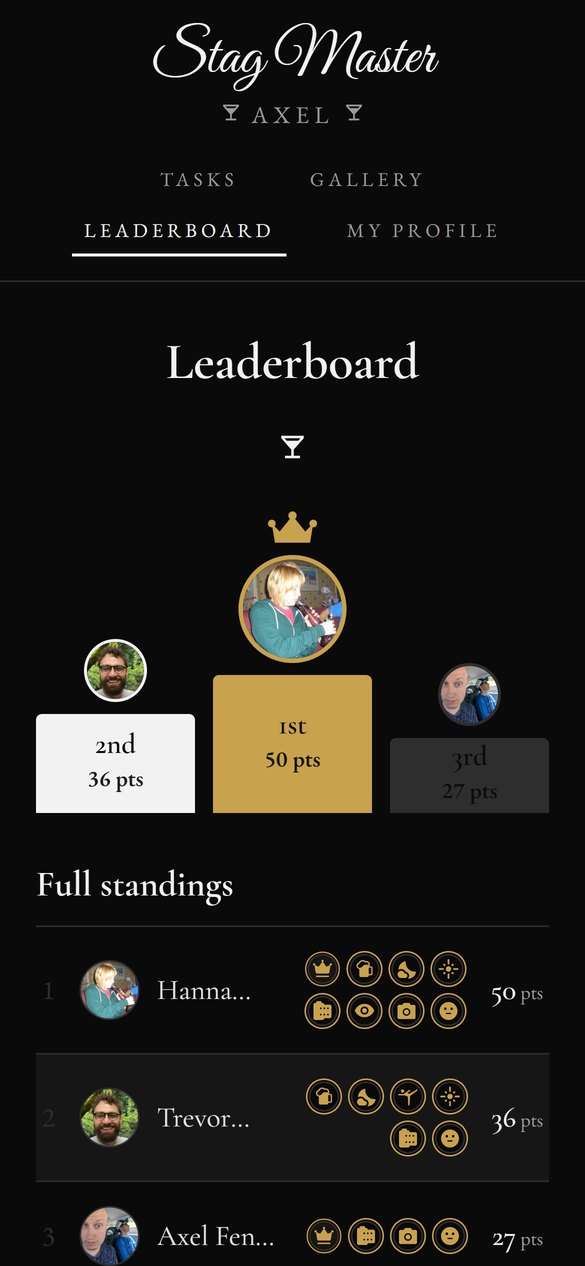
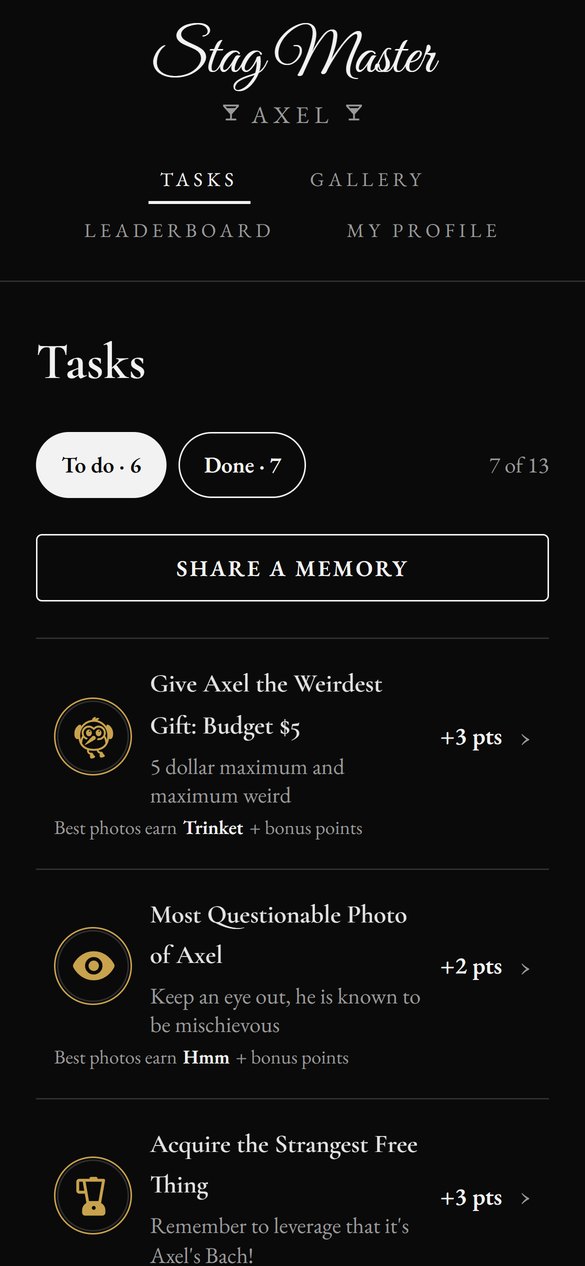
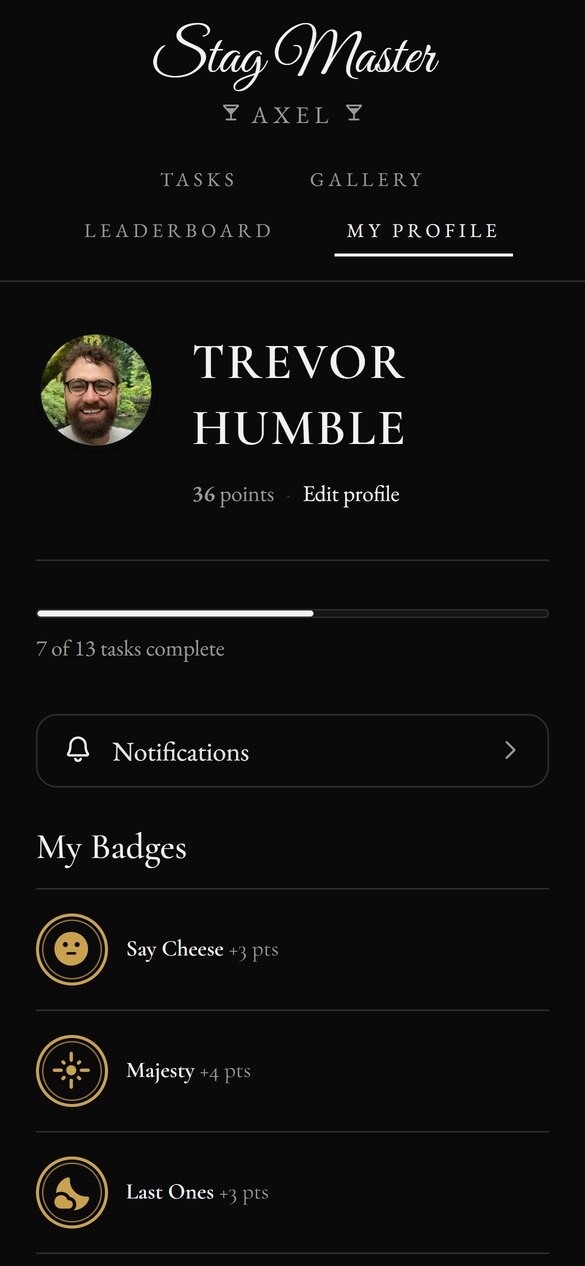
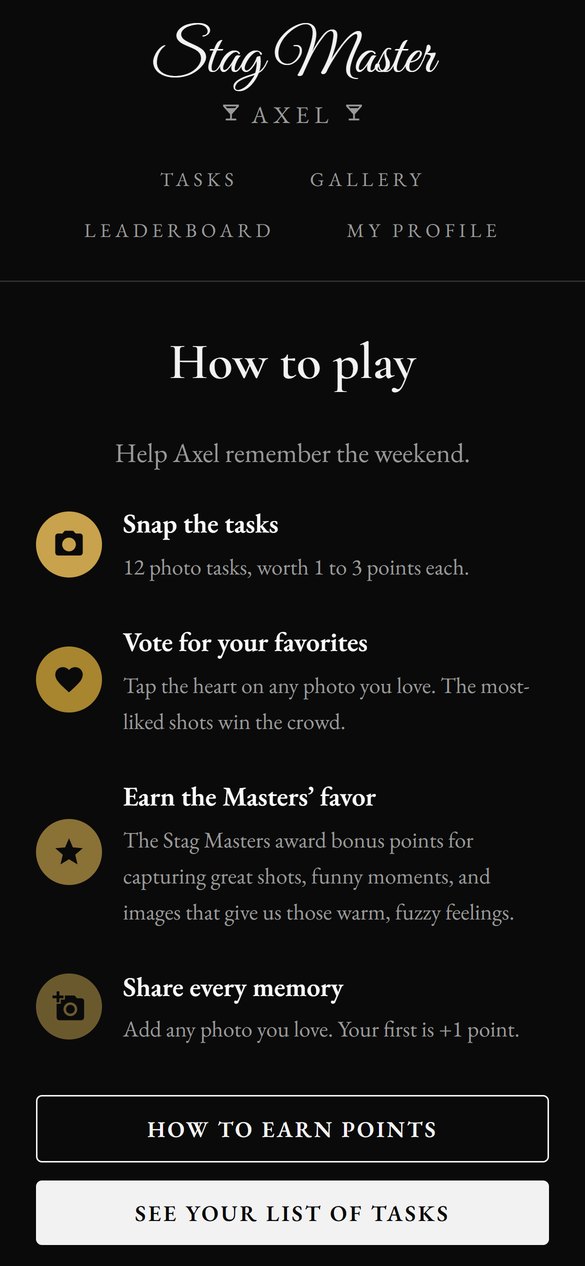
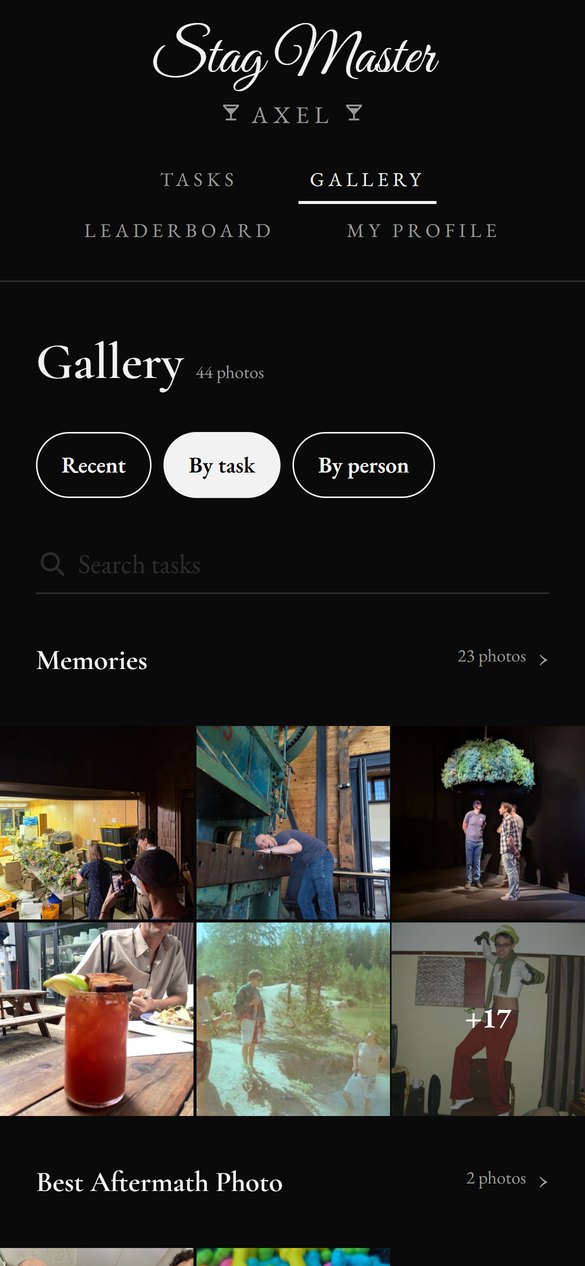
Stag Master
Bachelor party versionThe same app, run for the groom’s bachelor party as a separate event: its own address and data, a black-tie theme and its own badges. One setting switches between the two.

Scatter Camera
A field of grass slows Blender down, and most of it never appears in the shot. Scatter Camera grows grass only where the active camera is looking. Blades are thickest near the camera and thin out over a distance you set, and a black-to-white ramp controls how they fade.
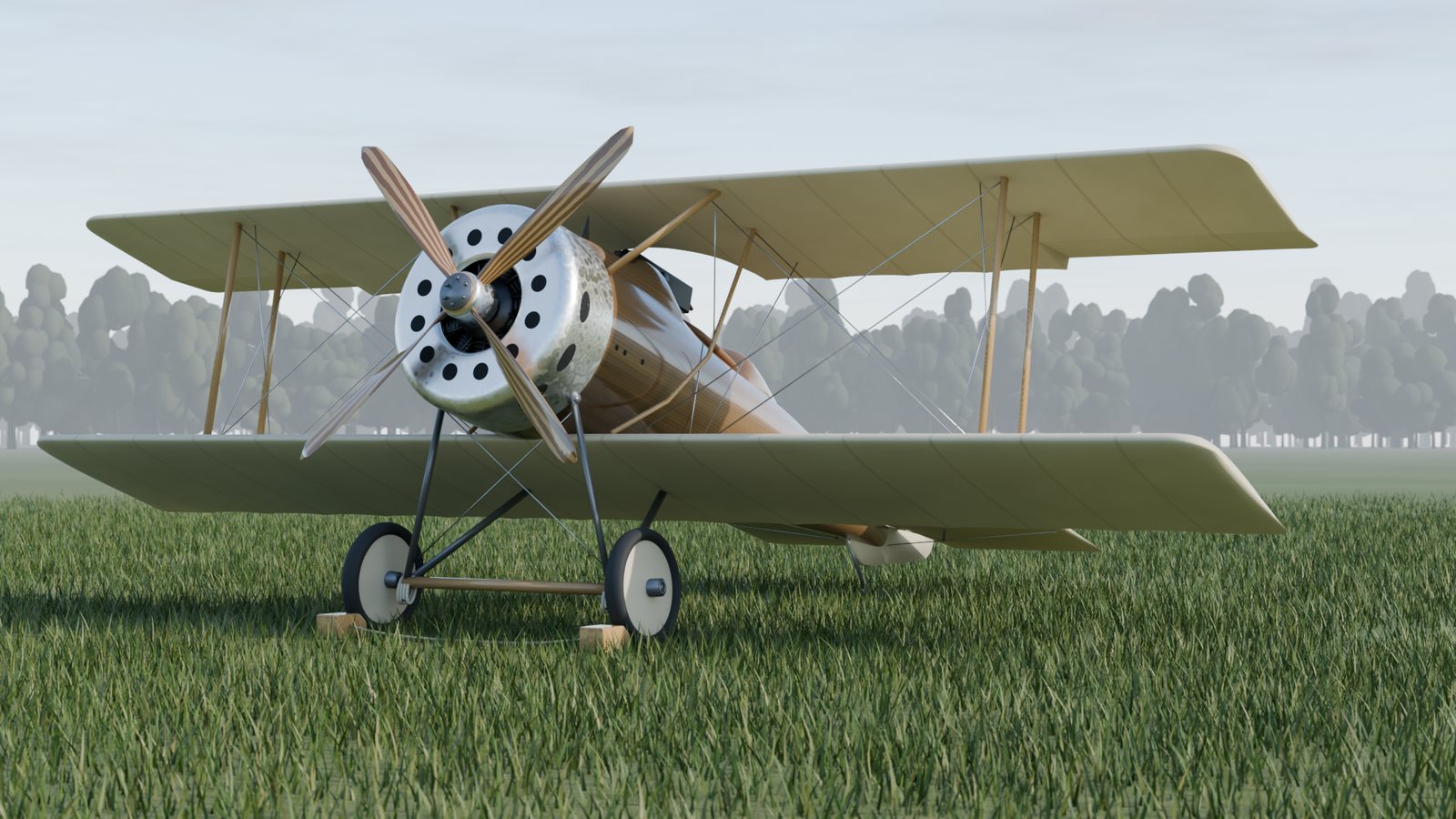
866,381 blades
Whole field133,869 blades
Front shot0